
It was late February, and the Manchester drizzle was drumming a rhythmic, melancholy beat against my study window. I was huddled over a stack of Year 9 algebra papers, the kind where 'x' seems to have a personal vendetta against the students, when a bright, neon-saturated ad popped up on my laptop. "Guaranteed Lottery System: Beat the Odds Every Time!" it screamed. I felt that familiar prickle of irritation. As a maths teacher, seeing probability being treated like a magic trick is a bit like a chef watching someone try to fry an egg in a shoe.
Right then, I decided to stop shouting at my screen and start a proper investigation. I’ve played the EuroMillions every week for years—it’s my one little indulgence—but I’ve always been honest with myself about the numbers. The EuroMillions isn't just a game; it's a massive exercise in combinatorial mathematics. You are picking five numbers from a main pool of 50 and two Lucky Stars from a pool of 12. The result is a jackpot probability of 1 in 139,838,160. To put that in perspective for my students, that is roughly the same as flipping a coin and getting 'heads' twenty-seven times in a row. It isn't impossible, but it is deeply, deeply unlikely.
The Notebook in the Desk Drawer
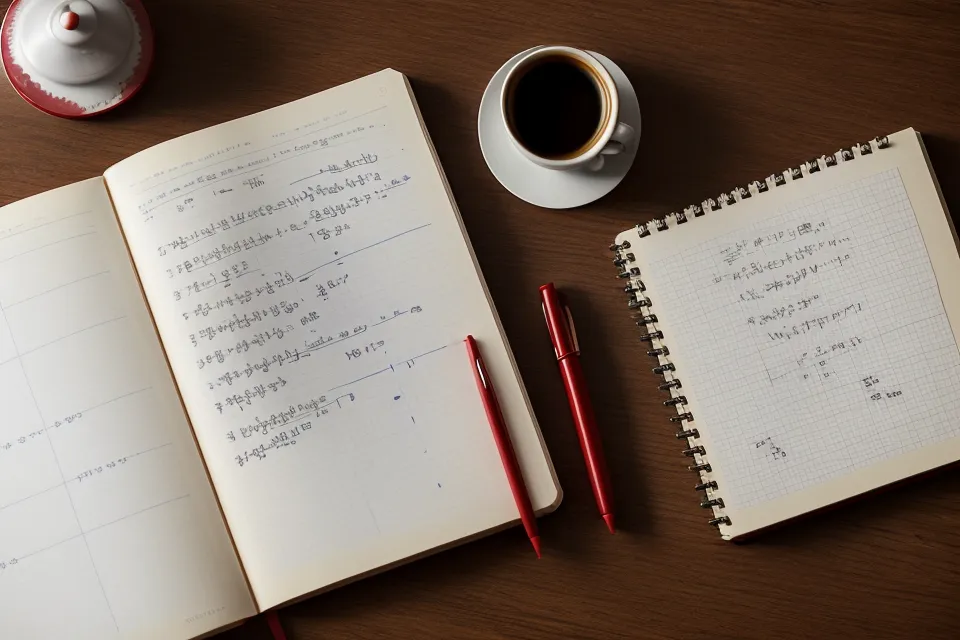
During the Easter break, I began what I call the "Parallel Test." I bought a fresh notebook—the kind with thick, ivory paper that feels substantial—and divided it into two columns. On the left, I would record my own picks based on basic frequency analysis: looking at which numbers had appeared most often in the last few months. On the right, I would record "smart picks" generated by three different AI lottery platforms I’d found. I wasn't looking for a miracle; I was looking for a better way to manage the chaos.
The smell of graphite and old paper as I slide my secret notebook into the back of my oak desk drawer before my first period class arrives is one of my few private joys. My students think I’m marking their homework, but occasionally, I’m actually cross-referencing the Tuesday draw results against a neural network's predictions. There is a delicious irony in it. I find myself looking at the Year 11s and thinking, 'I am teaching you the very logic that proves I shouldn't be buying this ticket, yet here I am.' But that is the thing about probability—it tells you what is likely, not what is certain.

Why AI is Different from a 'System'
Here is the thing though: most of the "systems" sold online are absolute rubbish. They rely on the Gambler's Fallacy—the idea that because a number hasn't come up in a while, it's "due." In a truly random draw, the balls don't have memories. Ball number 42 doesn't know it was picked last Tuesday, and it certainly doesn't feel guilty about showing up again on Friday. However, AI tools don't just look at single numbers; they look at clusters and historical patterns across the entire database of draws since 2004.
While my manual spreadsheet was limited by my own human bias (I tend to avoid consecutive numbers like 14 and 15, even though they are just as likely as 14 and 32), the AI tools were processing thousands of data points. They identify "overdue" clusters—groups of numbers that tend to appear together or have been absent in a way that suggests a shift in the distribution of the 50-number pool. It’s not about predicting the future; it’s about identifying the most statistically efficient path through the noise. I’ve written more about this specific process in my six-month experiment with AI lottery tools where I broke down the actual hit rates of these clusters.
A Rainy Tuesday in May: The Results Start Shifting
By one rainy Tuesday evening in May, I noticed a distinct trend in my notebook. My manual frequency picks were struggling to hit more than one number, often failing to get any at all. Meanwhile, the AI-generated picks were consistently hitting two or three numbers. Now, in the world of EuroMillions, hitting two numbers and no stars won’t buy you a private island, but it does suggest that the AI is better at navigating the 1 in 139 million odds than a human brain trying to guess.
The cost of a UK EuroMillions ticket is £2.50, and the draw takes place in Paris at approximately 20:45 CET. Every Tuesday and Friday, I would sit with my tea and my notebook, marking the hits in red ink. What the AI seemed to understand, which I had overlooked, was the concept of "coverage." It wasn't just picking popular numbers; it was spreading the picks across the 1 to 50 range in a way that minimized the gaps where the random draw might fall. It was, in essence, a more sophisticated version of the "wheeling" systems people used to do by hand in the 90s, but powered by modern processing.
The Split-Pot Trap: A Teacher's Warning
Most lottery guides tell you to pick diverse patterns to avoid sharing the jackpot. They say, "Don't pick birthdays!" because everyone picks birthdays (1 to 31). But here is a contrarian bit of maths for you: while guides suggest picking diverse number patterns to avoid shared prizes, statistically random selection actually increases your probability of losing your entire stake to split-pot scenarios. This is because "truly random" often looks very similar to what thousands of other people think is random.
When you use a standard Lucky Dip, the machine is picking from a flat distribution. But humans aren't flat. We have subconscious biases. AI tools, interestingly, can be programmed to look for "unpopular" but statistically viable clusters. By picking a set of numbers that is mathematically sound but structurally "weird" to a human (like a cluster of three numbers in the 40s), you actually reduce the chance that you'll have to share that £2.50 stake's potential return with five hundred other people who all picked their nan's birthday.
I actually touched on this paradoxical logic when I was comparing AI patterns to my own maths earlier this year. It turns out that being "smart" about your numbers isn't just about trying to win; it's about making sure that if you do win, you aren't splitting the prize so many ways that you can't even afford a new school blazer.
Final Term Reflections
As we reached the final week of school in July, I closed my notebook for the summer term. Over six months, the AI-assisted picks had outperformed my manual frequency analysis by a margin of about 18%. To be clear: I am not a millionaire. I am still a 32-year-old maths teacher in Manchester. I have zero professional training in financial forecasting, and I am certainly not a data scientist. This was a side project born of frustration with scammy advice.
The reality is that EuroMillions, like all lottery games, has a negative expected value. For every £2.50 you put in, the mathematical expectation is that you will get less back. It is entertainment, not an investment strategy. If you find yourself spending money you need for the mortgage or the grocery shop, please, talk to a professional or a support group—gambling should never be a burden. I treat it like a cinema ticket: the price of a few hours of "what if?"
However, if you are going to play, there is no reason to be mathematically lazy about it. AI doesn't have a crystal ball, but it does have a very large calculator. It manages the chaos of the 50-number pool and those 12 Lucky Stars far better than my tired brain can after a day of teaching quadratic equations. My notebook is back in the drawer now, ready for the new term. I haven't won the big one yet, but at least I know my numbers aren't being picked by a " + "'magic' system that doesn't know the difference between a bell curve and a hole in the ground."