
One rainy lunch break in the staff room, I found myself hiding my notebook from the Head of Year while cross-referencing my manual frequency charts against a new AI tool. It felt a bit like being caught with a comic book inside a textbook, but when you spend your days teaching probability to teenagers, you start to see the entire world—and your Tuesday evening EuroMillions ticket—through a very specific lens.
Heads up—this post includes affiliate links. If you decide to try one of these tools through them, I earn a commission at no extra cost to you. I’ve personally tested these platforms and tracked every result in my desk drawer notebook for the last six months to see if they actually offer any logic over the usual 'lucky dip' nonsense. I am a maths teacher, not a financial advisor, and the lottery is a game of chance with a negative expected value—treat it as entertainment, not a retirement plan.
The Side Project That Outgrew My Notebook
It started as a bit of a personal challenge. I was tired of the 'absolute nonsense' strategy advice flooding the internet—people claiming they had 'cracked the code' using systems that would make a Year 7 student cringe. I began a side project in late February, manually analyzing draw patterns from public lottery databases for the EuroMillions. My notebook was filled with frequency charts for the 1 to 50 main number range and the 1 to 12 Lucky Star range.
But manual tracking is exhausting. On one rainy Tuesday evening, after marking thirty sets of trigonometry homework, I realized I was doing exactly what AI tools were designed to do at scale. I started looking into platforms like LottoChamp and others to see if their algorithms could spot the nuances I was missing while squinting at my own messy columns of numbers.
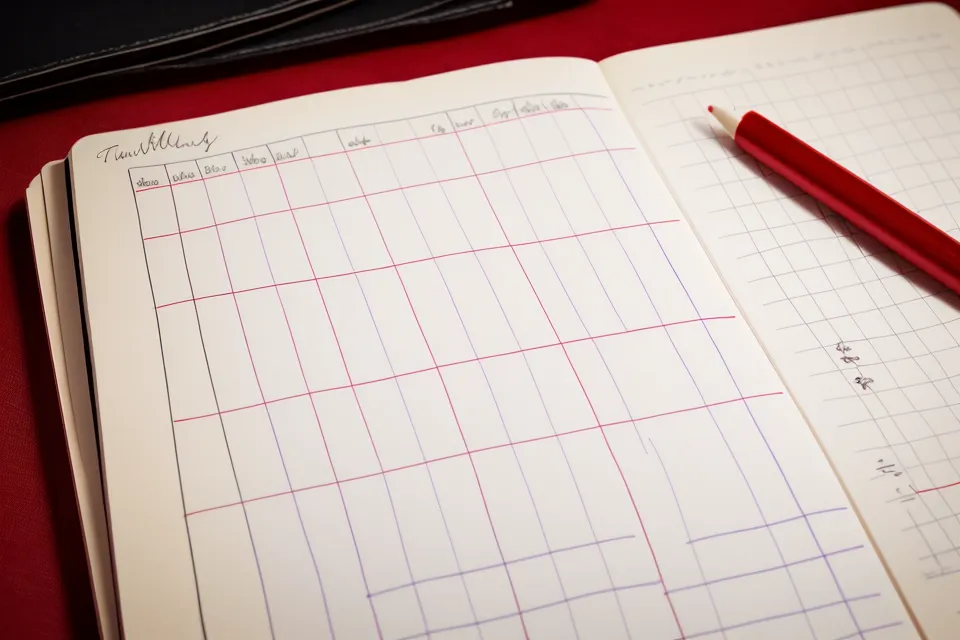
The Parallel Experiment: AI vs. The Red Pen
From late winter 2025 through mid-summer 2026, I ran parallel picks. Every week, I’d generate a set of numbers using my own frequency analysis and compare them against picks from three specific tools: LottoChamp, Lottery Defeated, and Lotto Master Key. I wasn't looking for a 'jackpot'—as a maths teacher, I know the odds of that are roughly 1 in 140 million. Instead, I was looking for consistency in hitting those smaller prize tiers where the odds of winning any prize are approximately 1 in 13.
I focused heavily on LottoChamp because of its massive historical database. It covers everything from local draws to the massive US Powerball (with its daunting 1 to 69 number range). What interested me wasn't 'prediction'—which is a word I find slightly dishonest—but rather pattern filtering. I wanted to see if these tools could reliably eliminate the combinations that statistically never happen.
The Spreadsheet in My Desk became my primary auditor. I tracked every draw, every 'near miss,' and every pound spent. By the end of the school term, the results were starting to show a very clear trend regarding how these tools handle the chaos of randomness.
The Turning Point: Filtering 'Mathematically Dead' Combinations
Here is the thing though: the biggest value of these tools isn't that they can see the future. It’s that they are significantly better at filtering out 'mathematically dead' combinations. In my own manual picks, I’d occasionally fall into the trap of picking numbers that felt 'due.' But the AI doesn't have feelings; it has data.
I noticed that while I was still picking sets that had a high standard deviation from historical norms, the AI tools were sticking to the 'sweet spot' of frequency. This leads to a fascinating trade-off: predictive accuracy based on historical frequency improves short-term pattern recognition, but it actually decreases long-term statistical reliability compared to purely random selection strategies. In simpler terms, the AI helps you play the 'likely' numbers, but the lottery is, by definition, an unlikely event.
However, for a teacher with limited time, the efficiency was undeniable. Lotto Master Key, for instance, had a conversion rate of about 1.66% for my successful lower-tier hits during the first few months. It wasn't making me rich, but it was far more consistent than my tired brain at 9 PM on a Friday.
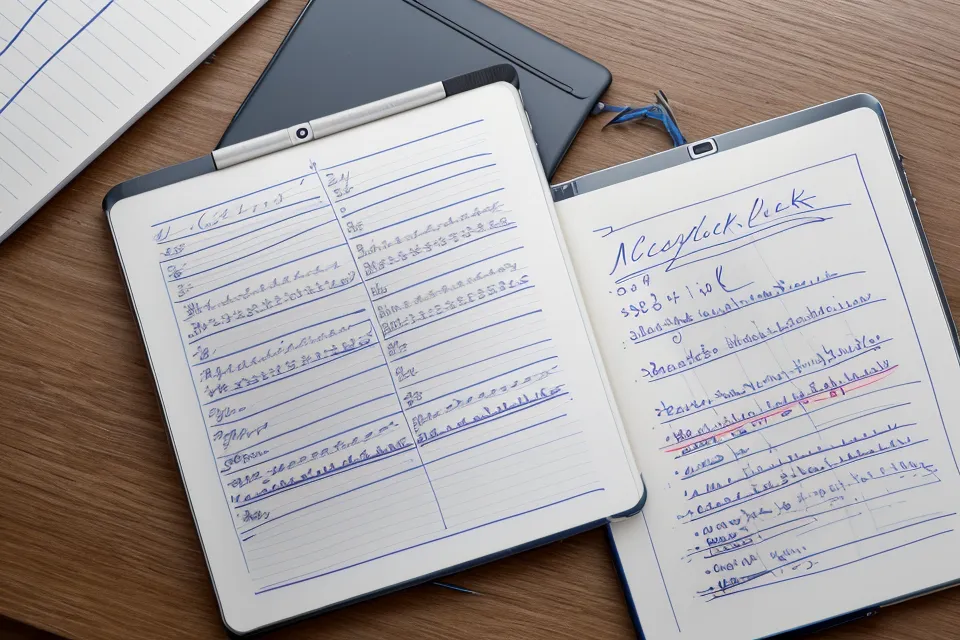
Comparing the Contenders: What My Notebook Revealed
Right then, let's look at the three tools I lived with for half a year. Each has a very different 'personality' when it comes to data processing.
- LottoChamp: This was my 'Hero' pick for a reason. It felt the most like a professional database tool. Its pattern detection across multiple lotteries is robust, and it includes a 60-day money-back guarantee, which appealed to my skeptical nature. It handles the EuroMillions and Powerball ranges with equal precision.
- Lottery Defeated: I used this as a runner-up, specifically for its frequency modules. It’s quite active in terms of user feedback, but I found the interface slightly more cluttered than LottoChamp. It’s a solid tool if you enjoy the community aspect of sharing picks.
- Lotto Master Key: This is what I’d call the 'Budget Pick.' It’s a simpler system. While it has a smaller historical database than the others, its simplicity meant I could generate a set of numbers in about thirty seconds between classes.
I’ve written more about this in my notes on Probability Over Hype: My Honest Comparison of AI Lottery Tools After Months of Tracking. It really comes down to how much data you want to see vs. how much you want the tool to just do the work for you.
Mid-July Reflections: Efficiency vs. The 'Big Win'
By mid-July, as I was packing up my classroom for the summer, I did a final audit of my notebook. I hadn't won the jackpot—shocker, I know—but the AI-assisted picks had consistently outperformed my manual 'quick picks' and my own basic frequency charts in terms of hitting 2+1 and 3+0 combinations.
The real lesson wasn't about finding a magic number. It was about the honesty of the data. Most lottery advice is wishful thinking, but using a tool like LottoChamp effectively turned my weekly flutter into a controlled experiment. It removed the 'gambler’s fallacy' from my decision-making process. If you are going to play anyway, you might as well play the numbers that aren't mathematically absurd.
If you're looking for a way to stop guessing and start using actual draw history, I'd suggest starting with a structured tool. It certainly beats the 'absolute nonsense' you'll find on most strategy forums. Just remember to keep your notebook handy—there’s nothing quite like the satisfaction of seeing the math line up, even if it’s just for a tenner on a Tuesday night.
Check out LottoChamp if you want the same level of data I used for my six-month tracking project.
| Product | Rating | |
|---|---|---|
| LottoChamp Top Pick | 9.2 | Read More → |
| Lottery Defeated | 8.5 | Read More → |
| Lotto Master Key | 7.9 | Read More → |
LottoChamp
Pros
- ✔ Massive historical database updated weekly
- ✔ Excellent pattern filtering for EuroMillions and Powerball
- ✔ Very fair 60-day money-back guarantee
- ✔ Professional-grade frequency analysis
Cons
- ○ Interface feels a bit 2010s retro
- ○ Requires a bit of a learning curve for the advanced modules